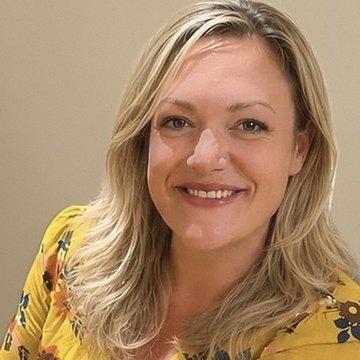


By Chloe Birt, Registered Midwife
Reviewed October 2026
Need to talk to someone now? The National Breastfeeding Helpline is there day and night, every day: 0300 100 0212.
A quick check
Three questions. Tap any box to read more.
The nappy guide
What goes in must come out. Count wet and dirty nappies over 24 hours:
- How heavy?
- To get a feel for it, pour about 3 tablespoons of water onto a clean, dry nappy. Wee should be clear or pale yellow.
- Orange or pink specks
- Reddish crystals that look like brick dust (urates) are common in the first couple of days. If you still see them after day 2, tell your midwife: your baby may need more milk.
- After about 6 weeks
- Some breastfed babies go several days without a poo. That's fine as long as, when it comes, it's still soft, yellow and plentiful.
- Formula-fed babies
- Around 6 wet nappies a day from a few days after birth, and at least 1 pale yellow or yellowish-brown poo a day in the first week.
Signs of a good feed
- At least 8 feeds every 24 hours in the first few weeks, often every 1 to 3 hours in the early days
- A few quick sucks at the start, then long, rhythmic sucks and swallows, with short pauses
- You can hear and see your baby swallowing (from about day 3 or 4)
- Their cheeks stay rounded, not hollow
- They come off the breast by themselves, and seem content after most feeds
- Your breasts feel softer afterwards, and your nipple looks the same: not flattened, pinched or white
- Feeding is comfortable after the first few sucks
Feeding hurts? Why does breastfeeding hurt?
- A good latch
- Chin touching your breast first, mouth wide open, more of the darker skin showing above your baby's top lip than below, cheeks full and round.
- In the first days
- Colostrum comes in small amounts, about a teaspoonful a feed, which is all a newborn tummy needs. Your breasts usually feel fuller around 2 to 4 days after the birth.
What weight tells you
It's normal for babies to lose some weight in the first 3 to 4 days. Your midwife will weigh your baby in the first week, and again at around 8 weeks, or sooner if there are concerns.
The numbers
- About 4 in 5 babies are back to their birth weight by 2 weeks, which suggests feeding is going well.
- Fewer than 1 in 20 babies lose 10% or more of their birth weight. A loss that size needs a careful look at feeding, and your midwife will make a plan with you.
When to get help
Talk to your midwife or health visitor today if:
- there are fewer wet or dirty nappies than the guide above, or you still see orange specks after day 2
- your baby feeds fewer than 8 times in 24 hours, or is sleepy and hard to wake for feeds
- feeds are usually very short (5 minutes or less) or very long (more than 40 minutes)
- your baby keeps coming on and off the breast, or refuses it
- feeding hurts beyond the first few sucks, or your nipple looks pinched or flattened afterwards
- your baby looks yellow (jaundice)
You can also call the National Breastfeeding Helpline, any time, on 0300 100 0212.
Call 999 or go to A&E if your baby is less than 24 hours old and looks yellow, is very sleepy or hard to wake, isn't feeding, is floppy or stiff, has no wet nappies, has a temperature of 38C or more, or 36C or less, or is struggling to breathe. Is this urgent?
Normal things that worry parents
- Feeding all evening (cluster feeding) is very common in the first 3 to 4 months, and it doesn't mean you're low on milk. Not every baby does it, and that's normal too.
- Soft breasts after the first few weeks, once your supply settles.
- Expressing very little. A pump is a poor guide to how much your baby gets.
- Short feeds, sometimes just 5 minutes, once your baby is feeding well.
- Growth spurts, when your baby wants to feed more for a few days.
- Every baby's pattern is different. If the nappies follow the guide and your baby is gaining weight, you can trust that they're getting enough.
My top tips
What I tell the families I look after
- Feed when your baby asks. You can't overfeed a breastfed baby.
- Thinking about topping up with formula? Talk to your midwife or health visitor first, as bottles can reduce how much milk you make. And if you do top up, that isn't failing. It's feeding your baby.
- You'll never have been so pleased to see a dirty nappy. Enjoy the feeling while it lasts.
Chloe
Questions about milk supply
How can I tell how much my baby is drinking?
How many wet nappies should there be?
What should their poo look like?
How often should my baby feed?
My baby wants to feed all evening. Am I low on milk?
My breasts feel soft now. Has my milk gone?
I can only express a little. Is that a sign?
How much weight is it normal to lose?
Should I top up with formula?
When should I worry?
Let me watch a feed
A feeding visit at home around Huntingdon, or an online feeding session anywhere in the UK. I'll watch a whole feed, check the latch, and make a plan with you. I can often visit within a day or two of booking, and you'll see my next free times when you book.
Chloe
Printed from lunarmidwife.co.uk/enough-milk. General information, not personal medical advice: always check with your own midwife or doctor.
Sources
- NHS. Breastfeeding: is my baby getting enough milk? Last reviewed April 2026.
- NHS. Breastfeeding: the first few days. Last reviewed September 2026.
- NHS Best Start in Life. Milk supply and Latching on, 2026. NHS
- NHS. Newborn jaundice (March 2026) and Dehydration (May 2026). NHS
- NHS. Formula milk: common questions, 2023.
- UNICEF UK Baby Friendly Initiative. How can I tell that breastfeeding is going well? and the breastfeeding assessment form.
- NICE. Postnatal care (NG194), 2021, updated 2026.
- RCPCH and Department of Health. Using the new UK-World Health Organization 0-4 years growth charts, 2009.
- The Breastfeeding Network (2026) and La Leche League GB (2022 and 2026).